
Energy Clearings
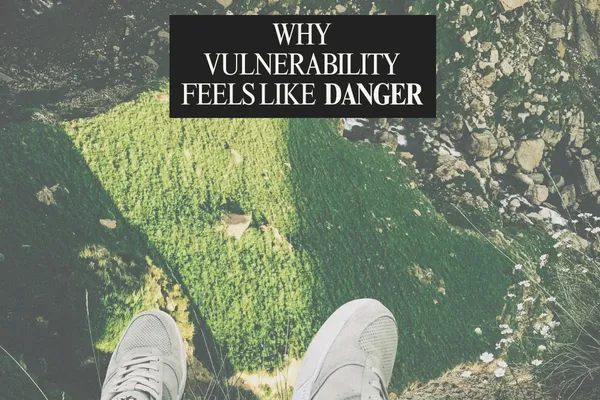
Why Vulnerability Feels Like Danger
Why Vulnerability Feels Like Danger (And How to Clear the Block)
Vulnerability is supposed to be the pathway to intimacy, connection, and authentic relationships.
But for many people, vulnerability doesn't feel like a pathway—it feels like a threat.
The idea of being truly seen, fully known, or emotionally exposed triggers anxiety, panic, or an overwhelming need to create distance.
This isn't a character flaw. It's not emotional immaturity. It's a subconscious protection program.
Let's talk about why vulnerability feels dangerous, where this program came from, and how it's been blocking the intimacy you actually want.
What "Vulnerability Feels Like Danger" Actually Looks Like
Fear of vulnerability doesn't always announce itself. It disguises itself as independence, strength, privacy, or "just being private."
Here's how it actually shows up:
Surface-Level Sharing Only
You can talk about facts, events, and information, but you can't share feelings, fears, or vulnerabilities. Conversations stay in the safe zone of what happened, never entering the territory of how you feel about what happened.
Why your subconscious does this:
Sharing information feels safe because it's not revealing your inner world. Sharing feelings exposes your emotional reality, which your subconscious has learned is dangerous.
The subconscious logic: "If I share facts but not feelings, they can't hurt the real me."
Deflecting With Humor or Changing Subjects
When conversations get emotionally real, you make a joke, change the subject, or redirect attention away from yourself. You're the one asking questions, never answering them deeply.
Why your subconscious does this:
Your subconscious has learned that emotional exposure leads to pain. Deflection is a protection mechanism that keeps you from being vulnerable while appearing engaged.
The subconscious logic: "If I keep things light, I stay safe. If I redirect attention, they won't see too much."
Physical Intimacy Without Emotional Intimacy
You can be physically intimate—even very physically intimate—but emotionally distant. Sex feels safer than emotional vulnerability. Physical closeness doesn't trigger the same danger signals as emotional exposure.
Why your subconscious does this:
Physical intimacy can be controlled, contained, and doesn't require revealing your inner emotional world. Emotional intimacy requires letting someone see parts of you that could be rejected or hurt.
The subconscious logic: "I can share my body without sharing my heart. Physical closeness is safer than emotional exposure."
Pulling Away When Someone Gets Close
Just when someone starts to really know you, you create distance. You get busy, pick fights, find flaws in them, or simply withdraw. The closer they get, the more your nervous system panics.
Why your subconscious does this:
Your subconscious has learned that being truly known leads to abandonment or betrayal. When someone gets close enough to see the real you, your subconscious initiates protection protocols.
The subconscious logic: "If they really know me, they'll leave. Better to create distance now than wait for the inevitable."
Oversharing With Strangers, Undersharing With Intimates
You can be surprisingly open with strangers or acquaintances, but you can't be vulnerable with people who are actually close to you. The more someone matters, the less you can share.
Why your subconscious does this:
Strangers can't hurt you because they don't matter. People who matter can devastate you. Your subconscious allows vulnerability where the stakes are low and blocks it where the stakes are high.
The subconscious logic: "I can be vulnerable with people who don't matter because they can't really hurt me. People who matter are too dangerous."
Needing to Be Strong/Independent/Self-Sufficient
You pride yourself on not needing anyone. Asking for help feels impossible. Admitting struggle feels like weakness. You handle everything alone, even when support is available.
Why your subconscious does this:
Your subconscious learned that needing people leads to disappointment or abandonment. Self-sufficiency became a protection mechanism—if you don't need anyone, no one can fail you.
The subconscious logic: "If I don't need anyone, I can't be disappointed or abandoned. Independence keeps me safe."
Where Fear of Vulnerability Comes From
Fear of vulnerability is installed through experiences that taught you: being seen equals being hurt.
Common origins:
Vulnerability Was Punished
You shared your feelings and were told you were "too sensitive," "too emotional," or "dramatic." You learned that emotional expression leads to ridicule or dismissal.
Vulnerability Was Used Against You
You opened up and the information was later used to hurt you, manipulate you, or betray you. You learned that what you share can become a weapon.
Vulnerability Led to Abandonment
You showed your real self and someone left. You were authentic and they rejected you. You learned that being truly known leads to being left.
Emotional Needs Were Ignored
You expressed needs or feelings and they were dismissed, minimized, or ignored. You learned that your inner world doesn't matter and shouldn't be shared.
You Had to Be Strong
You were parentified, given adult responsibilities too early, or told to "be strong" when you needed support. You learned that vulnerability equals weakness and weakness is unacceptable.
Shame Was Attached to Feelings
You were shamed for crying, expressing anger, showing fear, or having needs. You learned that your emotional reality is shameful and must be hidden.
Trust Was Betrayed
Someone you trusted deeply betrayed that trust. You learned that letting people in is dangerous and walls are necessary for survival.
These experiences weren't your fault. Your subconscious did what it could to protect you from further pain.
But the protection mechanism that helped you survive is now preventing the intimacy you want.
How Fear of Vulnerability Blocks Intimacy
True intimacy requires vulnerability. You can't have deep connection without emotional exposure.
When fear of vulnerability is running subconsciously, intimacy becomes impossible:
You can have relationships, but not intimacy - You can be in relationship with someone for years but never let them truly know you.
You can have sex, but not emotional closeness - Physical intimacy becomes a substitute for emotional intimacy, but it never satisfies the deeper need.
You can have conversations, but not connection - You talk about surface things, share information, but never share your inner world.
You can have people around you, but feel alone - You're surrounded by relationships but feel fundamentally unseen and unknown.
The pattern looks like this:
You meet someone who could be safe and trustworthy
Things start to get emotionally close
Your subconscious sounds danger alarms
You create distance through various protection mechanisms
The relationship stays surface-level or ends
Your subconscious says: "See? I kept you safe by preventing vulnerability."
The program gets reinforced for next time
The program wins, but you lose the intimacy you actually want.
Why Vulnerability Feels Physically Dangerous
When your subconscious has learned that vulnerability equals danger, emotional exposure can trigger actual physical responses:
Tightness in chest or throat
Difficulty breathing
Nausea or stomach discomfort
Panic or anxiety
Urge to flee or fight
Dissociation or numbness
Racing heart
Sweating or trembling
These aren't dramatic overreactions. These are real nervous system responses.
Your subconscious has categorized vulnerability as a threat to your survival. When you attempt vulnerability, your nervous system responds as if you're in actual danger.
This is why you can't just "choose to be more vulnerable." Your nervous system is overriding your conscious choice with survival responses.
The program needs to be cleared at the subconscious level where it lives.
What Tomorrow's Clearing Releases
Tomorrow's clearing (Week 2 Saturday: "Release Fear of Intimacy and Vulnerability") is specifically designed to address these blocks.
The clearing works to release:
Subconscious belief that vulnerability equals danger
Fear of being truly seen and fully known
Protection mechanisms that keep people at emotional distance
Past experiences where vulnerability led to pain
Shame attached to emotional expression and needs
Fear of abandonment that blocks intimacy
Belief that you must be strong/independent/self-sufficient
Programs that equate emotional exposure with weakness
Nervous system responses that trigger when intimacy deepens
Blocks to trusting that vulnerability can be safe
The clearing works at the subconscious and energetic level to rewire your nervous system's response to vulnerability and intimacy.
What Changes After Clearing Fear of Vulnerability
When you clear the subconscious program that turned vulnerability into danger, profound shifts occur:
Immediate changes:
Less anxiety about emotional exposure
Ability to share feelings without panic
Reduced need for deflection or distance
More comfort with being truly seen
Decreased physical symptoms when attempting vulnerability
Medium-term shifts:
Deeper conversations feel natural instead of threatening
You can ask for help without feeling weak
Emotional intimacy becomes possible
Relationships move beyond surface-level
You trust that being known doesn't always lead to being hurt
Long-term transformation:
Vulnerability feels like connection instead of danger
You can be fully yourself in relationships
Intimacy feels safe and desirable
Your nervous system relaxes around emotional exposure
You experience the deep connection you've been craving
The Difference Between Healthy Boundaries and Fear of Vulnerability
Some people confuse fear of vulnerability with healthy boundaries.
They're not the same thing.
Healthy boundaries are conscious choices about what to share, when, and with whom. They're based on discernment and self-protection.
Fear of vulnerability is a subconscious program that blocks emotional intimacy across the board, even with safe people in appropriate contexts.
Healthy boundaries say: "I'm choosing not to share this with this person at this time because it's not appropriate or safe."
Fear of vulnerability says: "I can't share this with anyone ever because vulnerability equals danger."
One is conscious choice. The other is subconscious protection.
Clearing fear of vulnerability doesn't remove your ability to have boundaries. It removes the subconscious block that prevents intimacy even when it's safe and appropriate.
Integration Support: Preparing for Tomorrow's Clearing
To prepare for tomorrow's clearing on fear of intimacy and vulnerability:
Identify your vulnerability blocks
Which patterns resonate most with you?
Surface-level sharing only
Deflecting with humor
Physical intimacy without emotional intimacy
Pulling away when someone gets close
Oversharing with strangers, undersharing with intimates
Needing to be strong/independent
Trace it back
When did you first learn that vulnerability was dangerous? What happened when you were vulnerable?
Notice current manifestations
How is fear of vulnerability showing up in your life right now? In romantic relationships? Friendships? Professional relationships?
Acknowledge the protection
"My subconscious installed this protection to keep me safe. It made sense then. I'm ready to release it now because I want true intimacy."
Assignment: Vulnerability Observation Exercise
Before tomorrow's clearing, do this awareness exercise:
Step 1: Think of someone you're close to (or want to be close to)
Step 2: Ask yourself:
What do they not know about me?
What am I afraid would happen if I shared that?
What does that fear remind me of from my past?
Is this person actually unsafe, or is my subconscious treating them as unsafe based on old programming?
Step 3: Notice your physical response
As you imagine being vulnerable with this person, what happens in your body? Tightness? Anxiety? Urge to flee? Notice without judgment.
Step 4: Acknowledge the program
"This physical response is my subconscious protection program. It's trying to keep me safe based on old experiences. I'm ready to clear it."
This exercise doesn't clear the program, but it prepares your conscious mind to support tomorrow's subconscious clearing work.
Related Clearings
To comprehensively heal fear of vulnerability and create safe intimacy, use these clearings together:
Clear Relationship Patterns and Blocks - https://vibrationelevation.com/post/clear-relationship-patterns-and-blocks (Week 1 Saturday clearing)
Release Fear of Intimacy and Vulnerability - https://vibrationelevation.com/post/release-fear-of-intimacy-and-vulnerability (tomorrow's clearing)
Clear Self-Love and Worthiness Blocks - https://vibrationelevation.com/post/clear-self-love-and-worthiness-blocks (coming Week 3 Saturday)
Release Subconscious Relationship Sabotage - https://vibrationelevation.com/post/release-subconscious-relationship-sabotage (coming Week 4 Saturday)
The Truth About Your Fear
If you recognize yourself in this description of fear of vulnerability, I want you to know:
This fear is not your fault.
You didn't choose to be afraid of vulnerability. Your subconscious learned that being seen equals being hurt, and it installed protection to prevent that pain from happening again.
The fact that you still carry this fear doesn't mean you're broken or emotionally immature. It means you have a subconscious program that was installed when you were too young to choose it.
And programs can be cleared.
You don't have to keep walls up forever. You don't have to keep deflecting when things get real. You don't have to keep choosing physical intimacy over emotional intimacy. You don't have to keep pulling away when someone gets close.
You can heal the wound that created the fear. You can clear the program that turned vulnerability into danger. You can learn that being truly seen doesn't always lead to being hurt.
True intimacy is possible. Deep connection is possible. Being fully known and still loved is possible.
It starts with clearing the subconscious program that's been protecting you from the very closeness you actually want.
Tomorrow's clearing is designed to do exactly that.
You're ready to release this fear. Your subconscious knows you're ready.
That's why you're here.